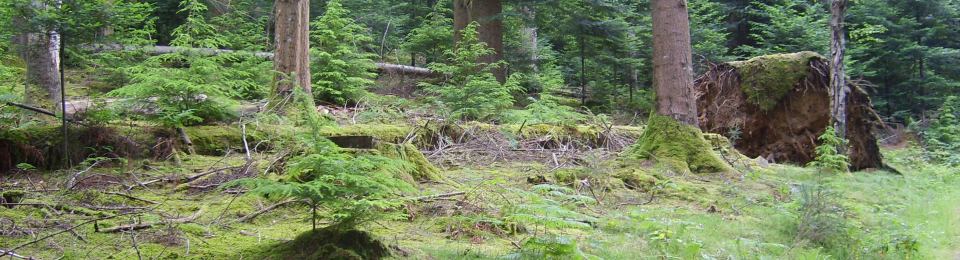
I’m pondering upon Tolkien’s relation to nature, especially forests and trees.
It’s probably true, that Tolkien was very much anti-industrialization. And I think we see that especially in the fact that Saruman is (or turns) bad. But also in Mordor, and that Saruman’s henchmen in the Shire tear down trees and build a mill etc.
But I think it’s more than that: One of the things I found most fascinating the first time I read LotR, and still do, is how important forests and trees seem to be in Middleearth. There’s the two trees, the old forest, Fangorn and the ents and Lothlorien.
I think it shows in several ways.
- Trees are important as symbols. There are the two trees in Valinor, and in LotR the white tree of Gondor.
- There’ the ents – they are like really special; maybe some of the most Tolkien-specific creatures (after the Hobbits)
- And then there are all the forests which again and again show up as very unique, very special and very well described places along the travels of Bilbo and Frodo. There’s one high mountain pass (Redhorn), one gigantic set of caverns (Moria), one river (Anduin) etc etc – but several forests
- Mirkwood is almost like an independent antagonist in the Hobbit. Not a nice place with Dol Guldur, the giant spiders, Thranduils rather sinister elves and generally a dark and dreary place.
- The Old Forest. Actually one of the places that I find the most fascinating. Clearly there are ents or at least huorns
- Lorien: With the Mallorn trees and the elves lives in the trees
- Fangorn: With the Ents
- When Frodo pass from Green Hill Country to Woody End, meeting the first black rider and the company of Gildors elves. It reminds me slightly of The Old Forest because Frodo try a shortcut and they actually get lost
- But there are also many other passages where Tolkien takes great care to describe which trees grows in a given area they are passing through.
And there are quotes like these:
“But close under the cliff there stood, still strong and living, two tall trees, larger than any trees of holly that Frodo had ever seen or imagined. … Here the Elven-way from Hollin ended. Holly was the token of the people of that land, and they planted it here to mark the end of their domain; for the West-door was made chiefly for use in their traffic with the Lords of Moria” (Before the doors of Moria)
and
“He felt a delight in the wood and the touch of it, neither as forester nor as carpenter; it was the delight of the living tree itself.” (Before entering Caras Galadhon, ref. http://www.houghtonmifflinbooks.com/features/lordoftheringstrilogy/lessons/six/delight.jsp)
It’s such a beautiful quote, and I don’t see how Tolkien could write something like that without he himself having a profound love of trees.
When I consider the letter from Tolkien to The Daily Telegraph in 1972 which is cited on the front page, it is clear that Tolkien was not initially so fond of trees and forests, because neither Mirkwood not the Old Forest are described as nice places. Rather they are described in the typical medieval way as dark and dangerous.
But during his work on Lord of the Rings, when working with Book II and III, he becomes aware of this and therefore takes great care to explain that the Old Forest had become a bad place due to bad influence. Likewise he later describes in detail how and when Mirkwood came under the shadow of Dol Guldur – and how it, after the War of the Ring, was restored to being Greenwood the Great.
Old note on The Old Forest from Tolkien:
Pippin: Like the Old Forest, do you mean?
Treebeard: Aye, aye, something like, but not as bad as that. That was already a very bad region even in the days when there was all one wood from here to Lune, and we were called the East End. But something was queer (went wrong) away there: some old sorcery in the Dark Days, I expect.
(from The History of Middle-Earth, vol. 7, The Treason of Isengard, chapter XXII, p. 415)
 Wandering Noldo